When you hire a software company, you usually have no idea who's actually writing the code. It might be a senior engineer. It might be a junior contractor three time zones away who was assigned to your project yesterday. You rarely find out until something breaks.
At Tysoft, there's no mystery. It's me.
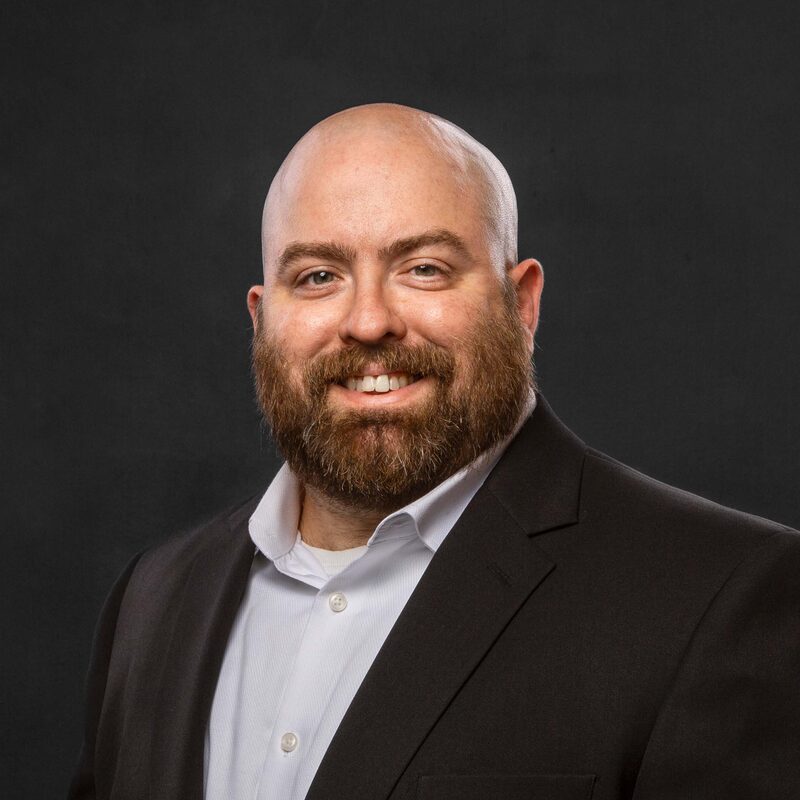
I'm Ty Hudson II, and I've been building software professionally for 20 years. I want to tell you a little about that — not to brag, but because when you're about to trust someone with your idea, your budget, and sometimes your customers' payment data, you deserve to know exactly who's on the other side of the keyboard.
Where I learned to build things that can't fall over
I didn't start with startups. I started at IBM, where I spent six years as a programmer analyst building internal tools that real teams depended on every day — a claims-management system tracking employee time, production, and quality, backed by databases I administered and tuned myself. When you cut your teeth at a place like that, you learn a specific lesson early: the software cannot just work on your laptop. It has to work at 3 a.m. when you're asleep and a hundred people are depending on it.
From there I went deeper into the parts most people never see. At Fischer Homes, I designed and built the company's entire REST API platform from scratch — the backbone that powered their website and stitched together five different legacy systems that were never meant to talk to each other. That's the unglamorous, load-bearing engineering that separates a demo from a business.
Twenty years in, I've written production code in TypeScript, Node, PHP, Python, Java, C#, and Swift. But the languages are the easy part. The real skill is knowing how to build something that lasts — that's secure, that scales, and that the next person (or the future you) can actually maintain.
A decade of shipping, not just pitching
In 2014 I started Tysoft so I could build and own real products end to end. Not slide decks — live software with real users and real stakes. A few of them:
- DRCCPRO — a credit-card processing platform for optometry practices. Live since 2018, it's processed over $1 million in payments. Patents pending. When you handle other people's money, there's no room for "mostly works."
- Black Widow Imaging — I was the lead engineer on an automated drive-through vehicle-imaging system for auto auctions and dealerships. A coordinated array of cameras captures 17 HD images and a full 360° view of a car in under ten seconds, tied to a backend that processes and publishes it all, plus iOS and Android apps for the field. Customers move 700–1,000 vehicles a month through it.
- CardinalPicc — dispatching, payroll, inventory, and invoicing for skilled vascular-access nurses, with SMS coordination and automated supply ordering baked in.
- Volasfera — my newest, and a good picture of where things are headed: an astrology platform with AI-generated readings, AI-generated imagery, and cinematic voice-narrated "StoryMovies," localized into five languages.
That last one points at the thing I'm most excited about right now.
Old-school engineering, new-school tools
The software world just changed more in two years than in the previous ten, and I've leaned all the way in. I build with the modern AI stack every day — Claude, OpenAI, ElevenLabs, fal.ai — and I've learned where it's genuinely magical and where it quietly gets you into trouble.
Here's proof you're holding right now: this very blog. Every article on this site can be listened to, read aloud in a natural voice, with each word highlighting as it's spoken — and the whole thing is also a podcast on Apple and Spotify. I built that pipeline myself with the same AI tools I'd use on your project. I don't just talk about this stuff; I ship it.
But 20 years of doing this the hard way taught me something the tools can't: AI is a phenomenal accelerator and a terrible architect. It'll help you go fast, and it'll happily help you build something that falls apart six months later. The value I bring is knowing the difference.
Why one senior engineer beats a faceless team
When you work with me, you get:
- One person who understands the whole thing — from the database to the API to the app to the server it runs on. Nothing gets lost in a handoff, because there is no handoff.
- Two decades of judgment, not two months. I've seen how projects fail, so I build to avoid it: real architecture, real security, real tests — the boring stuff that saves you at 2 a.m.
- Straight answers. If your idea needs a rescue, a refactor, or a rebuild, I'll tell you honestly — even when the honest answer costs me the bigger project.
- Someone who actually finishes. I've shipped and operated live products for over a decade. Launching is easy; keeping something running and paying its own way is the real test, and it's the one I care about.
Let's build something
I take on a limited number of engagements at a time — whether that's building your idea from scratch, rescuing a project that stalled, or adding AI to something you already run. If you've got something you need built by someone who's been doing this for 20 years and still loves it, I'd genuinely like to hear about it.
No sales pressure, no jargon — just an honest conversation about what you want to make and what it'll really take. Reach out and tell me about it.
Thanks for reading. It means a lot to get to do this work — and to do it for people like you.
— Ty